
 Whatsapp
 Telegram
 2026-07-28
 The gold price is expected to remain within a range above $4,000.
Gold price expected to fluctuate above $4,000
July 28, 2026, 11:13 AM (completed)
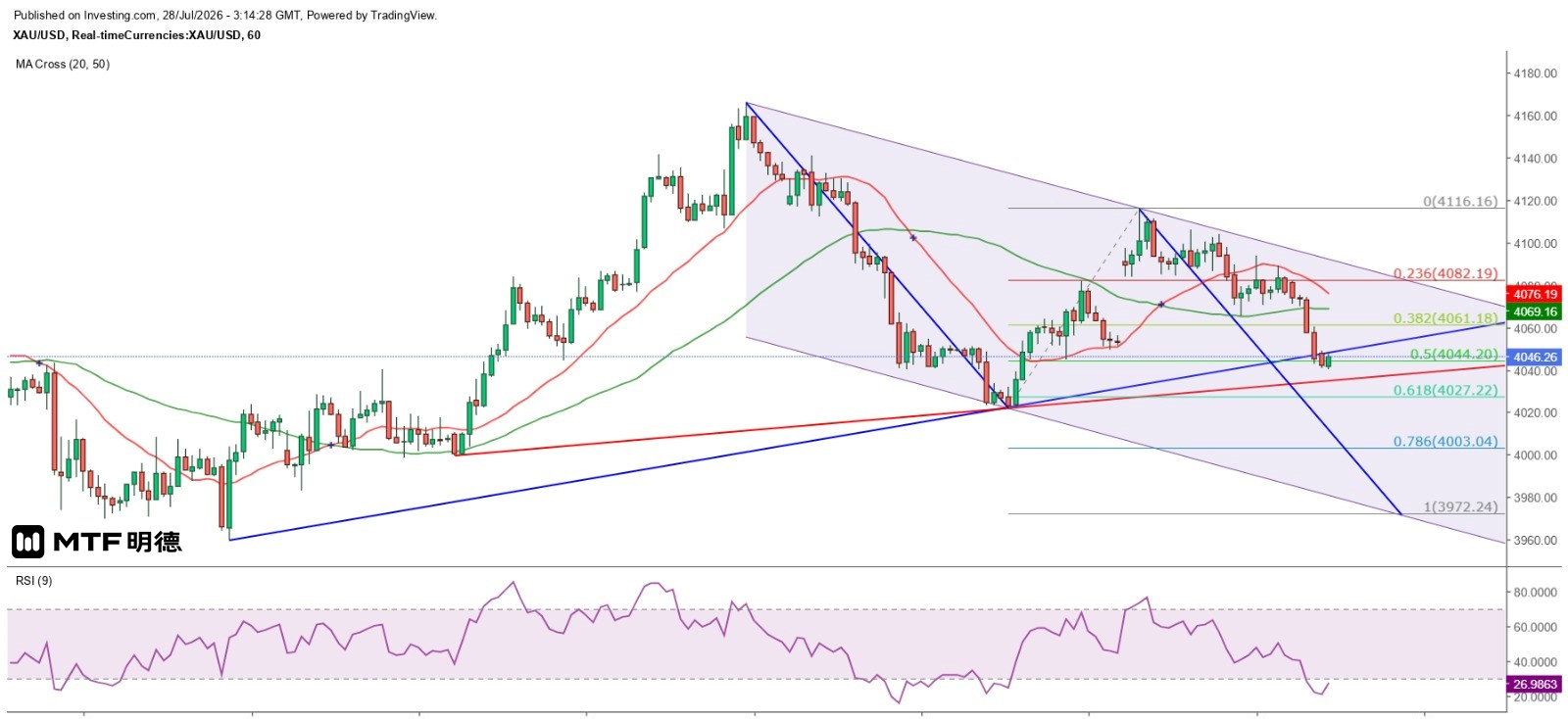
Yesterday, the spot gold price failed to hold above $4,110. As seen on the hourly chart, after reaching a high of $4,116.16 during early Asian trading, the price lost momentum and subsequently formed a large bearish candle, breaking below $4,100. It then developed a descending flag pattern ahead of New York market open, falling further below the 20-period SMA (currently around $4,085) shortly after the New York session began, with prices dropping as low as $4,065.42. However, by the close of the New York session, the price remained below the 20-period SMA, forming a small rounded top pattern amid sideways fluctuations.
In today's early Asian session, gold prices continued to decline, with the 50-period SMA on the hourly chart (currently around 4094) also broken, temporarily reaching a low of $4042.7. However, since July 17, gold has formed a narrowing triangle, and is currently positioned right at the extended support level of its ascending trendline. On a larger time frame—since June 30—gold has similarly been consolidating within a narrowing triangle. Of course, it could also evolve into a balanced descending channel pattern; using a Fibonacci extension of 100% from the recent drop, gold could potentially fall to $3972.24.
The sudden drop in gold prices does not appear to be related to the U.S.-Iran situation, as oil prices are also falling. Therefore, the only plausible explanation is the upcoming Federal Reserve FOMC monetary policy meeting. The market remains uncertain about the stance of the new Fed chair, but one thing is certain: even though the latest U.S. inflation rate has declined from 4.2% in May to 3.5% in June, it still exceeds the upper threshold. Thus, even if the Fed does not raise interest rates, it would be unlikely to issue a dovish statement. It is therefore no surprise that gold prices retreated ahead of the rate decision.
However, there is still room for gold prices to rebound. As long as the Federal Reserve maintains interest rates unchanged at this meeting and does not clearly signal a potential rate hike in the next one or two meetings—instead opting to monitor developments in the Middle East and their impact on oil prices and inflation—gold prices are likely to remain stable above $4,000 with fluctuations. For short-term bearish trades, it's advisable to set relatively tight stop-loss levels, such as just above the day's high or above the highest point of the past hour. Conversely, for bullish entries, investors should wait for clear upward signals before entering, or place stop-loss orders below the lowest level of the most recent hour. Currently, tensions between the U.S. and Iran remain volatile, while the Fed continues to adopt a cautious stance on monetary policy. Therefore, $4,000 remains a strong support level for gold, making a sharp breakdown below this level unlikely in the near term.
The above information is for reference only and does not constitute investment advice.


